The whole trip. In one place.
Public trips you can find by where you are. Private trips for the people you already trust. An AI that already knows the group — food, views, budget, the weather — and can write the day.
- Community
- Nearby
- Itinerary
- Photos
- Chat
- Trip AI
- Industry
- Travel
- Country
- India
- Team
- 2 people
- Scope
- Community + AI
Find a trip. Join the people. Ask for the day.
01
The inversion
A typical trip app is a folder of bookings. The people are in WhatsApp. The day is a screenshot of a map. The photos never leave anyone's camera roll. TripGlide is the opposite: a community you can join, and a trip that actually contains the trip.
02
What a trip app usually forgets
Most travel products sell the destination. The people, the day, and the pictures still live somewhere else.
- 01The people already there
The mountain is public. The trip is a chat that never invited the town. You cannot see who is going where you are going — or ask to come.
- 02Private with no shape
Friends still plan in a thread. Dates slip. The guest list is a group name. A closed trip should still feel like a trip, not a mute WhatsApp.
- 03The day as a collage
Scenic points, meeting times, and the map are four different messages. By afternoon nobody is looking at the same day.
- 04A brain that isn't on the trip
A travel chatbot answers a country. This trip is a town, six appetites, a budget, and a sky. It cannot plan a morning it does not know.
- 05Packed in the group chat
What to bring for this place is a list that dies the night before. Tickets and passes hide in a screenshot someone forgot to forward.
- 06Photos that never come home
Everyone has the waterfall on their phone. Nobody has the trip. The album is twelve camera rolls and a hope that someone will AirDrop later.
03
This is TripGlide.
One trip. Two ways to belong. A day you write — or a day the trip already knows how to compose.
- Private. Or public.
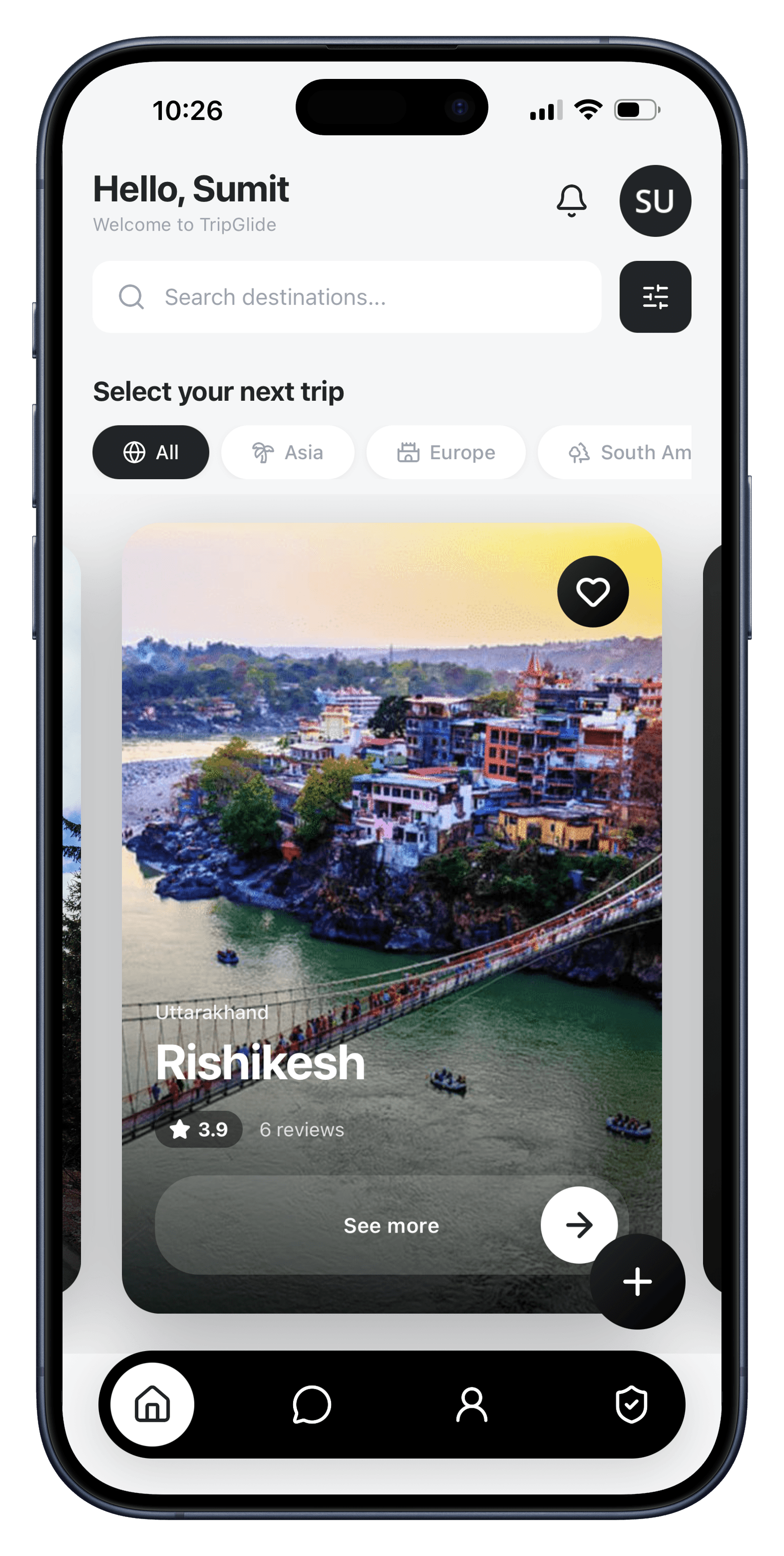
A closed trip for the people you brought. A public trip for the people already there. Same product. You choose who can see it.
- Happening around you.
Public trips show up by location. People nearby can see what's happening, and request to join. The host decides who walks in.
- The day, written once.
Each day holds the scenery, the points, the locations — morning to night, in one place. Not a collage of maps. The whole day, where the group can find it.
- Ask it to plan the day.
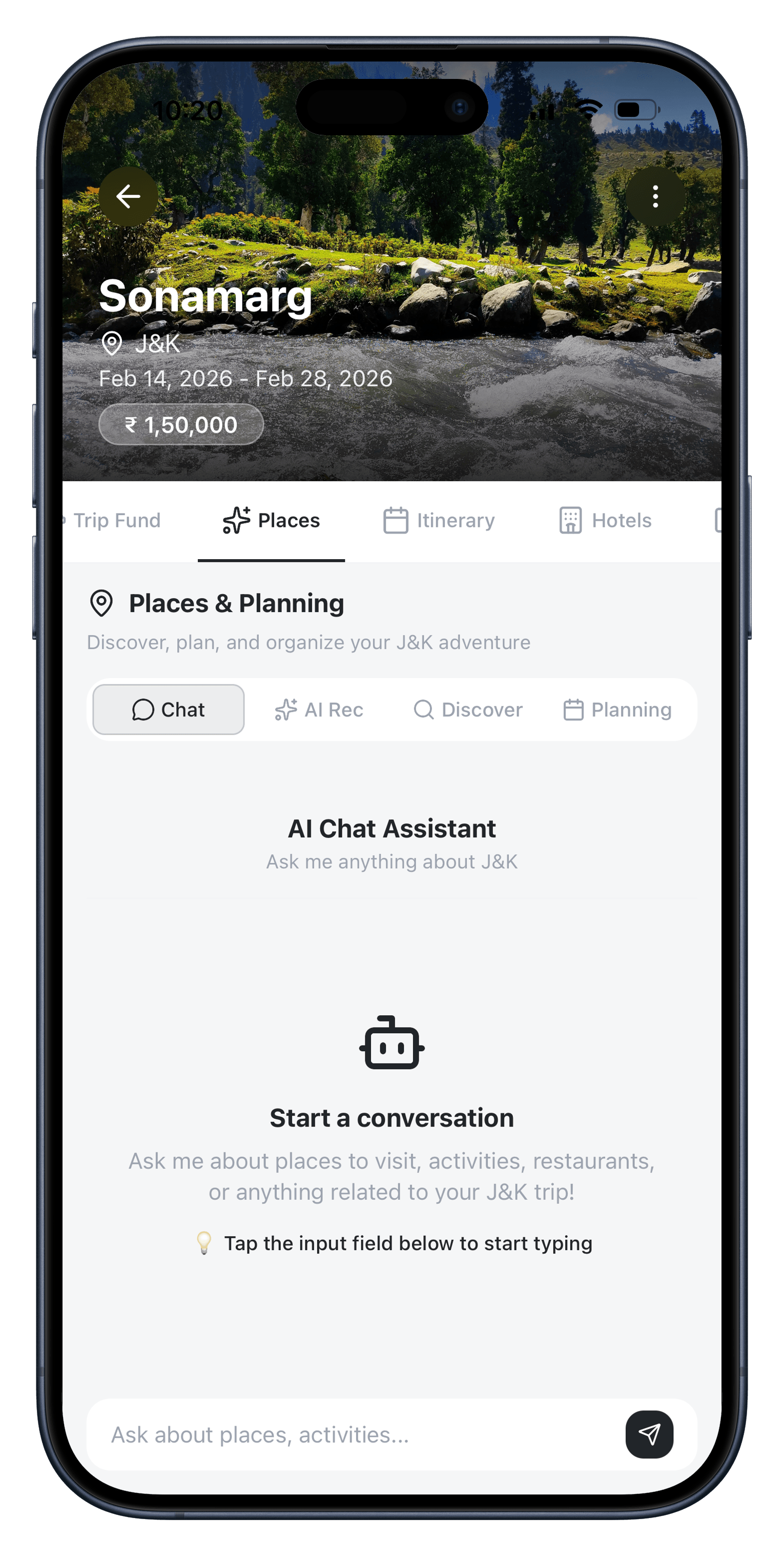
It already has the trip. Who is going. What they eat. What they want to see. The budget. The weather this morning. Then it writes a day that feels like a local walking you through it — viewpoints, the market, the quiet stop — and you keep it, or you edit it.
- Packed for this place.
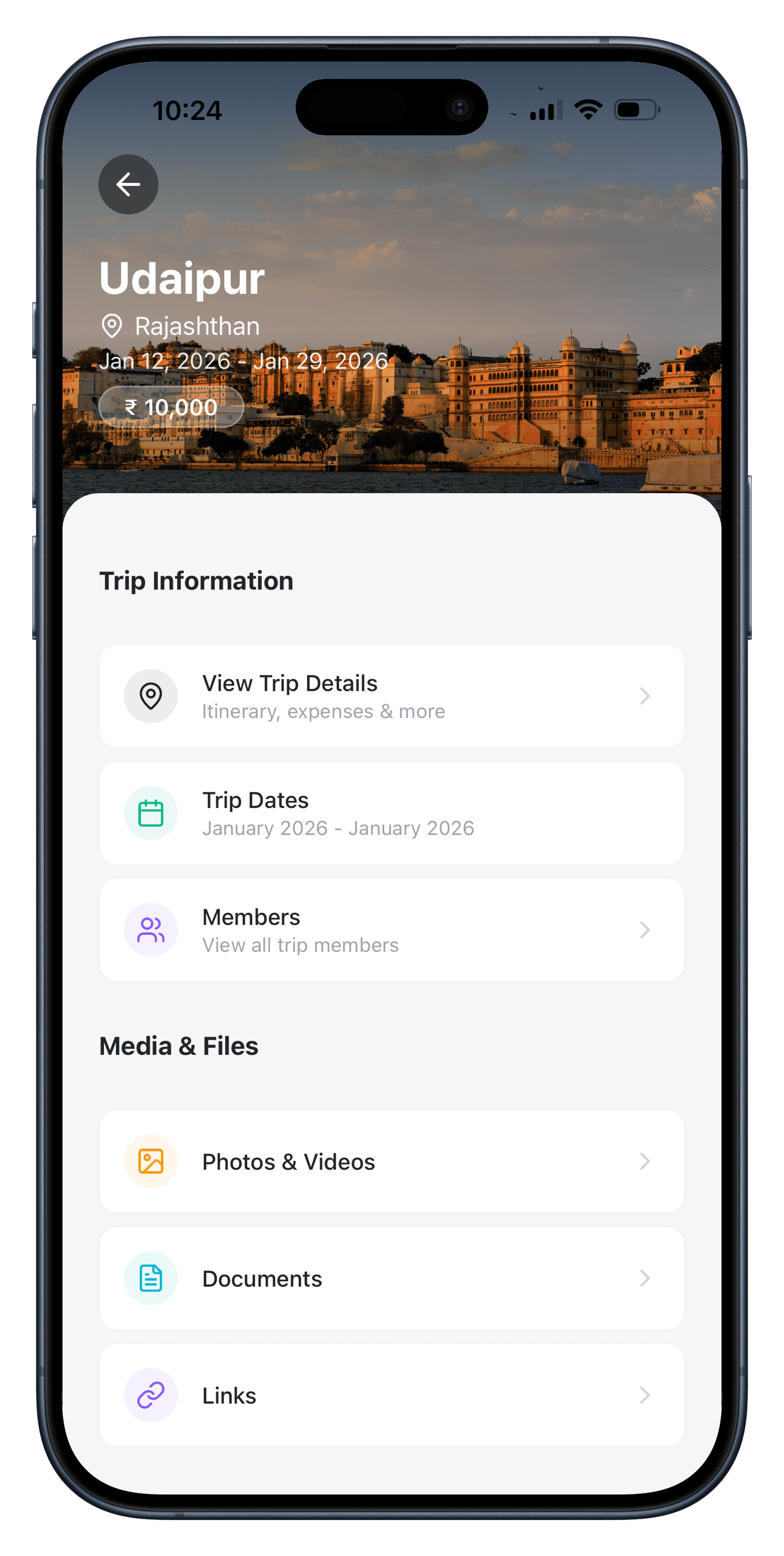
A checklist for where you actually are. Permits, tickets, and passes sit on the same trip as the day they belong to. Nobody hunts a photo of a ticket at the gate.
- The roll for this moment.
Photos belong to an event on this trip — not a dump of everyone's camera. Anyone on the trip can upload from their phone. Everyone on the trip can see them.
- Talk where the plan is.
Chat lives on the trip. The conversation cannot drift from the people who are going, or the day they are living.
04
Trip AI. Five agents. One day.
This is not a travel chatbot with a destination sticker. Ask it to plan the day, and five agents work against this trip — these people, this place, this morning.
- 01Group
- 02Nearby
- 03Evidence
- 04Weather
- 05The day
- 01It already knows the group
Every member is on the trip. Eating, visiting, scenery, budget — the first agent reads the people, not a persona. The loudest chat does not get the whole day.
- 02What's actually around you
The second agent finds nearby places for this destination and this day. Not a country list. Not last year's saved map.
- 03Blogs. Reviews. Popularity. Cost.
The third agent weighs what travellers already wrote — posts, reviews, how loved a stop is, and what it costs — so the plan is not only the most photographed gate.
- 04The weather is a constraint
The fourth agent reads the sky. Clear: the viewpoint. Rain: the market, the indoor stop, the day that still works. Weather is not a footnote under the itinerary. It writes it.
- 05Then it writes the day
The fifth agent composes morning to night: sightseeing, local markets, a guide's pacing — the quiet stop between the famous ones. You asked it to create the day. You can still change a stop.
05
The trip moves while you are in it.
This is not a page you reload. A new person, a new photo, a new message — because the trip changed.
- 01Nearby is live
Public trips around you are not a printed list. What is happening here updates as trips open and fill.
- 02A request becomes a member
The host accepts. The person is on the trip. Chat, the day, and the roll open without a refresh ritual.
- 03A photo lands for everyone
Someone uploads from the event. The rest of the trip sees it because they are on the same record — not because someone remembered to share.
- 04The next plan knows who arrived
A new member brings food, views, and budget onto the trip. The day the AI writes next is for this group — and this morning's weather — not yesterday's brochure.
06
What we built
AonHive designed and built TripGlide end to end — the Expo app and the backend the community runs on. Public and private trips. Nearby join requests. A day you write, or a day five agents compose from this group: who is going, what they eat, what they want to see, the budget, the weather, nearby places weighed by blogs, reviews, popularity, and cost. Then chat, photos, a checklist, stays, and a ledger on the same trip.
07
What we delivered
- TripGlide for iOS and Android
- Public and private trips
- Nearby public trips by location, with join requests the host accepts
- Day-by-day itinerary: scenic points, stops, and locations in one place
- Destination pre-checklist, with tickets and passes on the trip
- Event photo rolls — everyone uploads, everyone on the trip can see
- Trip chat with the people who are actually going
- Trip-context itinerary AI: five agents on members, nearby places, reviews and cost, weather, and the composed day
- Preference-aware suggestions: food, scenery, visiting, budget — then sightseeing, local markets, and local-guide pacing
- Shared expense ledger, trip fund, and structured stays
- Trip backend for community, itinerary, media, chat, ledger, and trip AI
08
Technology
- React Native
- Supabase
- OpenAI
- Expo